Fallas
Fallas are a Valencian tradition which celebrates Saint Joseph's Day (19 March) in Valencia, Spain. For three weeks, the bangs, booms and bams of fireworks ricochet off the buildings of Valencia day and night. Expert pyrotechnicians, set off some of the largest, loudest and most rhythmic displays to be found anywhere.
It's all part of Fallas, Valencia's biggest festival, held annually in mid-March for the past 200 years. With endless firecrackers, fire, food, flowers and finery, Fallas is a bit like Mardi Gras gone wild. Commissions, which are year-round social clubs similar to Mardi Gras krewes, work with designers to build fallas (also called ninots), enormous Disneylike figures that are sometimes a bit bawdy but usually have a biting political theme. Not all ninots are created equal. The fancier, higher-priced exhibits that are expected to win top prizes charge visitors admission for a closer look. Frugal visitors can stand outside the low metal gate and gawk for free. There's no hiding these structures. Ninots used to be made of papier-mâché, but now papier-mâché is pasted over molded Styrofoam. None of this is cheap. Some ninots cost about $500,000.
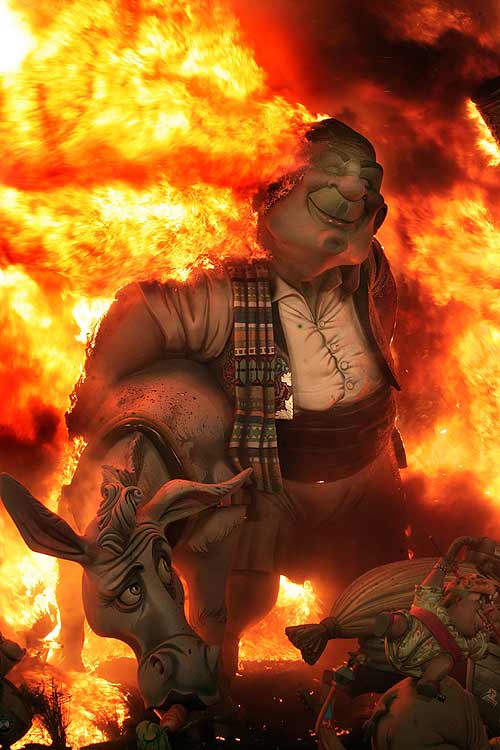
Here's the wacky part: After a year of planning, financing and building these whimsical monstrosities, the commissions set them all on fire. All, except one. Popular vote determines which ninot is saved from the flames lighted around midnight March 19, the night of the feast of St. Joseph. Ninots spared over the years are exhibited in the Museum of the Ninot in Valencia. But all the others burn. First the flames slowly lap away the bodies and faces of the figures. As the fire spreads, crowds step back from the intense heat just as the towering effigies start to fall under a black cloud of smoke.
Legend has it that Fallas (pronounced FI-yas) began when carpenters burned their wood scraps each spring in a sort of a spring cleaning. One thing led to another, and the Spanish spirit blossomed, resulting in the festival that attracts about a million people to Valencia. Although Fallas technically runs March 15-19, the afternoon fireworks display called mascletá takes place at 2 p.m. March 1-19 in the city hall square. Daytime fireworks, you might ask? Locals explain that the seven-minute ceremony is more than fireworks. It is about the rhythm the fireworks produce. Each day, a different pyrotechnician demonstrates what he is capable of doing with an inordinate amount of gunpowder in various forms.
And what's a festival without pageantry? Each commission has its own fallera (queen) and her court. Young women are dressed in elaborate and expensive 18th-century dresses. And all the while, fireworks are heard. Sometimes, the sky lights up from the gunpowder. Buildings shake. Tourists jump when a firecracker lands near them. Want to learn more? Check out a journalist's own experience this year:
Mad, bad and dangerous to go: Las Fallas
Here's this year's winning ninot:
 03/019/02007 11:49 PM