St Patrick
Today it's St Patrick's. Saint Patrick (Latin: Patricius, Irish: Naomh Pádraig) was a Christian missionary and is the patron saint of Ireland. Patrick was born in Roman Britain. When he was about sixteen he was captured by Irish raiders and taken as a slave to Ireland, where he lived for six years before escaping and returning to his family. He entered the church, as his father and grandfather had before him, becoming a deacon and a bishop. He later returned to Ireland as a missionary.
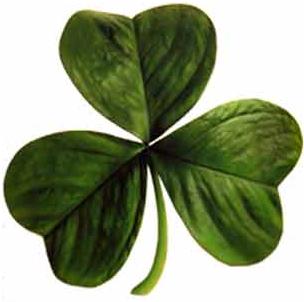
Legend credits Patrick with banishing snakes from the island, though post-glacial Ireland never actually had snakes. Legend also credits Patrick with teaching the Irish about the concept of the Trinity by showing people the shamrock, a 3-leaved clover, using it to highlight the Christian belief of 'three divine persons in the one God' (as opposed to the Arian belief that was popular in Patrick's time). Whether or not these legends are true, the very fact that there are so many legends about Patrick shows how important his ministry was to Ireland.
March 17, popularly known as St. Patrick's Day, is believed to be his death date (according to the Encyclopedia Britannica) and is the date celebrated as his feast day. For most of Christianity's first thousand years, canonisations were done on the diocesan or regional level. Relatively soon after the death of people considered to be very holy people, the local Church affirmed that they could be liturgically celebrated as saints. As a result, St. Patrick has never been formally canonised by a Pope, but he is still widely venerated in Ireland and elsewhere today.
 03/017/02007 5:29 PM